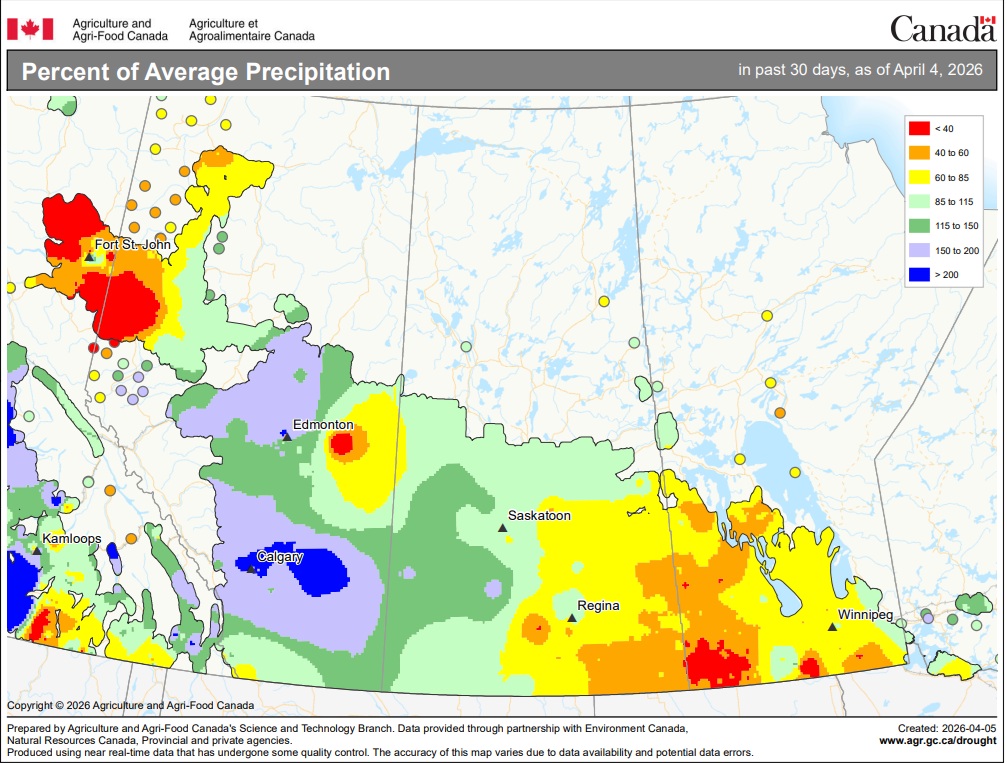
March precipitation across the Prairies was mixed, with some helpful late-month moisture but still not enough to erase dryness in various key areas heading into spring.
As can be seen on the map below, March precipitation was especially sparse in parts of Manitoba, eastern Saskatchewan, northeastern Alberta and parts of the Peace River region. On the other hand, the best moisture showed up in two main zones, including central Alberta – most notably from Calgary east to near the Saskatchewan border.
Still, many areas missed out on meaningful precipitation, including parts of the southwestern Prairies where dryness and drought have become a recurring spring concern. Outside of last year, that region has entered spring with notable dryness or outright drought every year since 2020, and dry conditions were also common in 2019, according to a World Weather report released earlier this week. After a reprieve in 2025, drought has returned, renewing worries about soil moisture and crop prospects.
Dryness and drought have also plagued portions of the Peace region over the past 18 months.
Looking ahead, World Weather said La Nina is expected to fade into neutral conditions this month, with El Nino potentially forming in May or June. That shift is not expected to offer immediate help for the Prairies. Over time, however, a sustained El Nino could increase atmospheric moisture and eventually improve rain chances for the drought-stricken western Prairies, World Weather said.